


How Leader Behaviour Shapes Organisational Culture


We don’t talk about emotional contagion enough in leadership.
We talk about strategy. We talk about performance. We talk about values, engagement scores and productivity.
But we often overlook how every leader shapes the climate — the day-to-day emotional experience of work — simply by showing up. And that climate, repeated over time, influences the culture of the organisation: the patterns, norms, and behaviours people take for granted.
Emotional contagion is one key mechanism. It’s the process by which emotions transfer from one person to another, often unconsciously and quickly. We pick up tone, pace, facial expression, posture. Our nervous systems respond before we’ve consciously interpreted what’s going on.
Leaders sit at the centre of this exchange. Not because they are more important as human beings, but because they hold positional influence. People watch them closely, scan for cues, and take their lead — often literally. Which means leadership is never emotionally neutral, and the climate you set matters.

The Human Reality
It’s also worth recognising that managing our emotional impact becomes harder when we’re under personal strain, or when the organisation itself is navigating pressure, change, or uncertainty. Stress narrows our perspective, shortens our patience, and amplifies reactive tendencies. Even leaders who are usually calm and measured can unintentionally transmit tension, frustration or doubt to those around them.
The very behaviours that help teams feel safe — consistency, curiosity, fairness, steadiness — are harder to sustain in moments of pressure. And yet, those are the moments when emotional contagion matters most. How we respond in these moments shape the climate, and sustained climate patterns form culture.
Stress narrows our perspective, shortens our patience, and amplifies reactive tendencies — all of which influence the climate that spreads through the team.
What Emotional Contagion looks like in Practice
Imagine a leader who is personally stressed and enters a meeting with tight shoulders and clipped responses. The pressure of looming deadlines or organisational change amplifies their anxiety. No one names it, but something shifts. The room tightens. People become cautious. Contributions shorten. Risk-taking drops. After the meeting, conversations move to corridors rather than being aired openly.
Contrast that with a leader who, even under pressure, manages to pause, notice their own state, and respond with steadiness. They acknowledge the tension openly, listen fully, and challenge ideas without projecting frustration. The emotional experience in the room is entirely different — calmer, safer, more productive. And that difference shapes what happens next.

The Ripple Effect
At an individual level, leaders who sustain emotional steadiness allow people to focus on thinking and contributing rather than constantly scanning for cues or protecting themselves. When leaders transmit tension, individuals expend energy managing emotional risk instead of doing their best work.
At team level, repeated emotional patterns either erode or build trust. Teams quickly learn what is safe to say, what is likely to provoke defensiveness, and where accountability is fair — or not. Trust, as Patrick Lencioni highlights in The Five Dysfunctions of a Team, is the foundation of high-performing teams. Emotional contagion accelerates the building or the erosion of that trust.
Zoom out further, and these patterns define organisational culture. Leaders who remain grounded even in difficult times create an environment where collaboration, innovation, and engagement are possible. When emotional reactivity dominates, the opposite emerges: silos, avoidance, disengagement, and high turnover.
So what?
The point isn’t that leaders need to suppress emotion or be perfect. It’s that awareness of emotional contagion — especially when under strain — is vital. Leadership is not emotionally neutral, and moments of stress are when emotional transmission is at its most powerful.
High performance, trust, and psychological safety flourish not through strategy alone but through leaders managing themselves in ways that allow teams to thrive, even under pressure. The emotional tone a leader sets — consciously or unconsciously — becomes the air everyone else breathes.
The emotions we carry, especially under pressure, ripple through our teams, shaping trust, collaboration and ultimately the culture of the organisation.
Awareness of this ripple — and how we manage our own behaviours — is the first step toward leading with intention.
One helpful lens for thinking about this is through four simple leadership anchors: Awareness, Empathy, Courage and Connection.
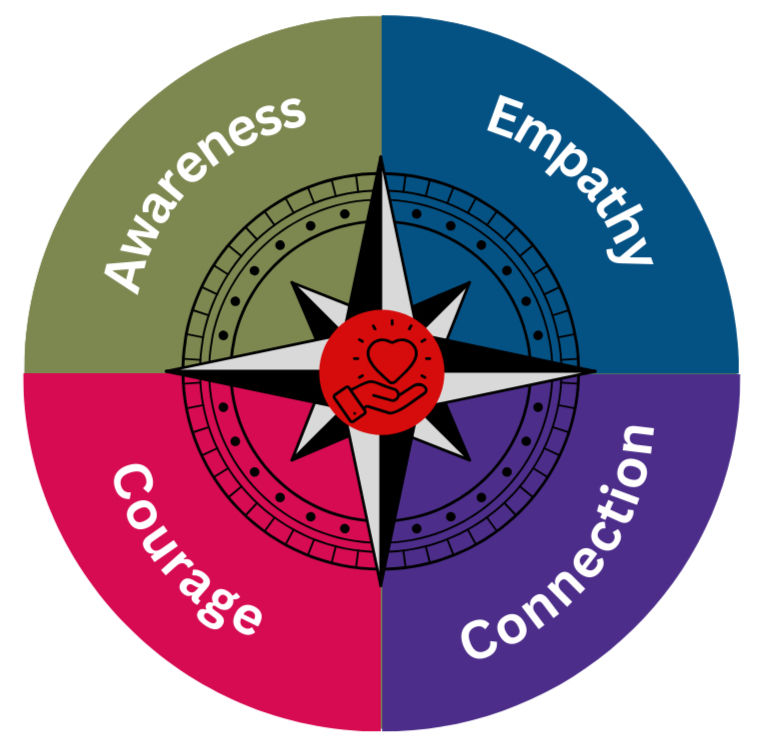
Awareness allows you to notice your own emotional state before it spills into the room,
Empathy helps you recognise what others may be carrying, especially in times of pressure,
Courage enables you to have honest conversations and hold standards without reactivity, and
Connection reminds you that performance is always relational.
Leaders who consciously strengthen Awareness, Empathy, Courage, and Connection can shape a positive climate, which over time reinforces a healthy culture. When leaders consciously strengthen these four areas, they become far more intentional about the culture they are shaping — moment by moment.
As you reflect on your own leadership:
What emotional tone are you consistently bringing into
your team, particularly in moments of strain or change?
In the next article, we’ll explore how developing emotional intelligence helps leaders understand and regulate their emotional impact more effectively — turning awareness into deliberate, positive influence.
If you’d like more reflections, practical insights and thought leadership on compassionate, high-performing workplaces delivered straight to your inbox, you can sign up here: Subscribe to newsletter.


Comments